
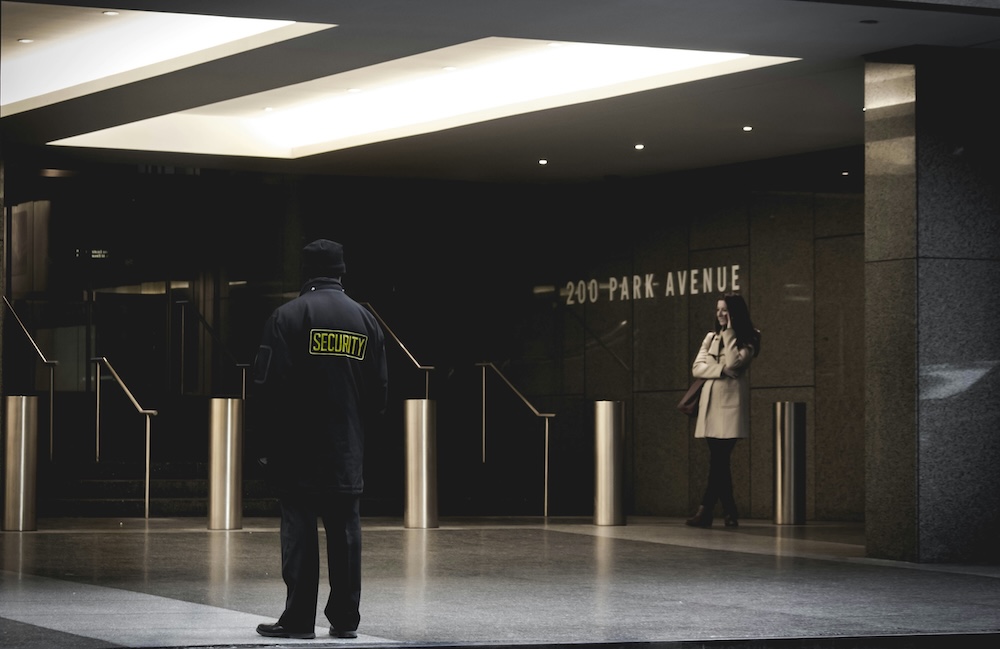
Physical security is another essential layer of protecting confidential business information. Many organizations implement physical security measures throughout their offices and facilities to control access and reduce risk. These safeguards often include ID badges that must be scanned before entering secure areas, visible employee credentials, monitored entry points, motion sensors, restricted access doors, and closed-circuit television (CCTV) systems. In some organizations, security personnel or law enforcement officers actively monitor these systems to ensure that unauthorized individuals cannot enter without proper clearance or an authorized escort.
Not every business requires the same level of physical security, but organizations that handle sensitive financial data, proprietary products, employee records, or confidential client information often rely on these measures as a first line of defense. Physical access control helps prevent unauthorized individuals from gaining entry to spaces where sensitive conversations and materials may be exposed.
At the same time, virtual security plays an equally important role in protecting confidential information. Many organizations invest in cybersecurity professionals, secure networks, firewalls, encryption tools, and access monitoring systems to protect digital infrastructure from unauthorized access, cyberattacks, and data breaches. These protections are especially important in modern workplaces, where sensitive business discussions frequently occur through virtual meetings and cloud-based collaboration tools.
This creates a unique security consideration for minute takers.
Whether attending meetings in person or virtually, minute takers occupy a position of trust and represent a potential access point to sensitive information. Minute takers are often either internal staff members or third-party professionals brought in specifically to document confidential meetings. In both cases, they must be treated as authorized participants with carefully controlled access.
For in-person meetings, this often means signing in as a visitor, wearing a visitor badge, being escorted through restricted areas, and only being granted access to designated meeting spaces. These physical security steps help ensure that third-party minute takers cannot access unauthorized areas or confidential information beyond what is necessary for their role.
In virtual environments, similar safeguards must be applied. Minute takers should only receive access through secure, password-protected meeting links, authenticated logins, waiting room approvals, or other restricted access measures. Granting access in this controlled manner helps ensure that only approved participants can join meetings where confidential discussions take place.
Because minute takers are entrusted with sensitive internal information, they are often subject to additional vetting requirements. Many organizations require background checks, professional references, and signed Non-Disclosure Agreements (NDAs) before allowing a minute taker to participate in confidential meetings. These safeguards help verify that the individual is trustworthy, professional, and capable of handling sensitive information responsibly.
This level of scrutiny is necessary because minute takers routinely encounter confidential discussions involving company strategy, personnel matters, financial decisions, legal issues, and proprietary business information. Without proper physical and virtual security controls, minute taking can become an overlooked vulnerability in an organization’s broader confidentiality strategy.
By applying the same security standards to minute takers that are used for employees, vendors, and other authorized third parties, organizations can reduce risk while still benefiting from accurate and professional meeting documentation. Physical access controls, secure digital access, and strong confidentiality expectations all work together to ensure sensitive information remains protected.