
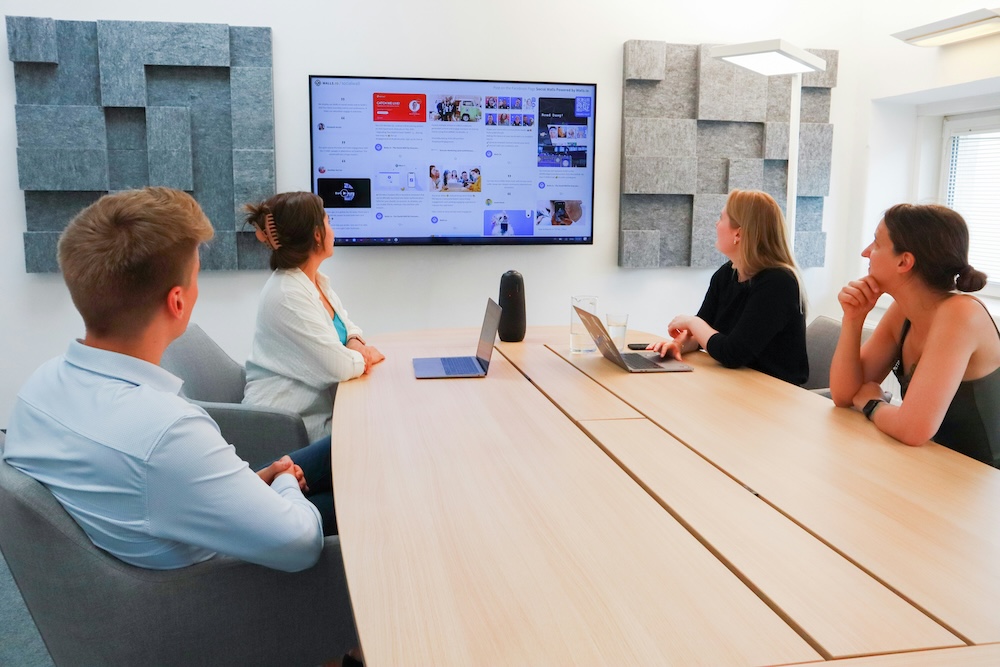
Effective meeting minutes are an essential part of organizational communication. They provide a reliable record of decisions, discussions, and action items while also helping absent participants stay informed. As workplaces continue to evolve, organizations are finding new ways to make meeting minutes more accurate, engaging, and useful. Two of the most effective strategies are creating a feedback loop for continuous improvement and incorporating visuals into meeting documentation. Together, these approaches can transform meeting minutes from simple records into dynamic communication tools.
According to the National Archives, “The primary purpose of meeting minutes is to ensure that a clear and factual record of decisions is maintained for future reference.” Clear and organized documentation improves accountability, strengthens collaboration, and supports better decision-making across teams.
One of the first steps in improving meeting minutes is establishing clear objectives. Organizations should determine what they want their minutes to accomplish. For example, minutes should be concise while still capturing key discussions, action items, deadlines, and responsible parties. Setting expectations early creates a consistent structure and gives team members a standard against which they can evaluate the quality of the documentation. Business News Daily notes that clear objectives help ensure meeting minutes remain organized and aligned with the needs of participants.
Once meeting minutes are distributed, gathering constructive feedback is critical. Team members should be encouraged to review the minutes and provide input regarding accuracy, clarity, and completeness. Asking targeted questions such as “Were the major decisions captured correctly?” or “Are the action items clear?” can generate meaningful feedback. According to Forbes, focused feedback encourages engagement and helps improve professional communication.
After feedback is collected, organizations should identify recurring themes and implement improvements in future meeting records. This creates a continuous feedback loop in which documentation becomes stronger over time. Harvard Business Review emphasizes that iterative improvements help streamline communication and ensure documentation evolves alongside organizational needs.
At the same time, many businesses are modernizing meeting minutes by integrating visuals such as charts, diagrams, timelines, and infographics. Traditional text-heavy minutes can be difficult to process, especially during long or highly detailed meetings. Visual elements help simplify complex information and make important points easier to understand quickly. As Forbes explains, visuals are highly effective at condensing large amounts of information into more digestible formats.
Visual communication also improves engagement and retention. Research discussed by Psychology Today suggests that the brain processes images significantly faster than text, making visuals an efficient way to reinforce information. This can be especially valuable when reviewing meeting outcomes, project updates, or performance metrics.
Incorporating visuals also supports different learning styles within the workplace. Some employees absorb information best through written explanations, while others learn more effectively through visual representation. By combining text with graphics, organizations create more inclusive communication that benefits a broader range of participants. Edutopia highlights the importance of adapting communication methods to support diverse learning preferences.
The rise of remote and hybrid work environments has also contributed to this trend. Collaboration platforms such as Zoom, Microsoft Teams, and Google Meet make it easier to create, share, and edit visual content during and after meetings. According to TechCrunch, digital collaboration tools have transformed how organizations communicate and interact with shared information.
However, organizations should use visuals strategically. Overloading meeting minutes with excessive graphics can become distracting rather than helpful. Visual elements should support the written content by emphasizing important trends, clarifying data, or simplifying complex concepts. The Balance Small Business advises that visuals should enhance communication rather than overwhelm it.
Improving meeting minutes also requires organizations to build a culture that values continuous improvement. Feedback should be viewed as a tool for growth rather than criticism. Teams that regularly evaluate and refine their documentation processes are more likely to produce meeting records that remain accurate, relevant, and useful over time. Inc. Magazine notes that organizations embracing feedback and innovation often achieve stronger communication outcomes.
In conclusion, combining feedback loops with visual communication represents a modern and highly effective approach to meeting documentation. By setting clear objectives, encouraging constructive feedback, implementing continuous improvements, and strategically incorporating visuals, organizations can create meeting minutes that are more engaging, accessible, and impactful. As workplaces continue to evolve, organizations that invest in stronger communication practices will be better positioned to improve collaboration, accountability, and overall productivity.
References
National Archives. (2023). How to Take Meeting Minutes. Retrieved from National Archives
Business News Daily. (2024). How to Write Effective Meeting Minutes. Retrieved from Business News Daily
Forbes. (2023). The Power of Feedback in Professional Communication. Retrieved from Forbes
Harvard Business Review. (2023). Improving Communication Through Iterative Feedback. Retrieved from Harvard Business Review
The Balance Small Business. (2024). How to Effectively Manage Meeting Minutes. Retrieved from The Balance Small Business
Inc. Magazine. (2024). Building a Feedback Culture in Your Organization. Retrieved from Inc. Magazine
Harvard Business Review. (2023). The Power of Visual Communication in Business. Retrieved from Harvard Business Review
Forbes. (2024). How to Use Visuals to Enhance Business Communication. Retrieved from Forbes
Psychology Today. (2023). The Science Behind Visual Learning. Retrieved from Psychology Today
Edutopia. (2024). Adapting to Different Learning Styles in the Workplace. Retrieved from Edutopia
TechCrunch. (2024). The Rise of Digital Collaboration Tools in Business. Retrieved from TechCrunch
The Balance Small Business. (2024). How to Incorporate Visuals into Your Business Communication. Retrieved from The Balance Small Business
Inc. Magazine. (2024). Investing in Visual Communication for Business Success. Retrieved from Inc. Magazine