AI is rapidly changing the way organizations work. From drafting emails to analyzing data, artificial intelligence has become an increasingly common tool for improving efficiency and reducing administrative workloads. One area where AI has gained significant attention is meeting documentation.
AI-powered tools for meeting minutes are now everywhere. They promise real-time transcription, automated summaries, speaker identification, and instant action items—often at little or no upfront cost. Platforms such as Otter.ai, Fireflies.ai, Zoom AI Companion, and Fathom are marketed as productivity tools that can reduce the time employees spend taking notes and preparing meeting records.
There is no question that these tools can be useful. AI can capture large amounts of information quickly and provide a convenient starting point for organizing discussions. However, efficiency alone does not equal accuracy, professionalism, or discretion.
When it comes to official meeting records, human minute takers still play a critical role.
The question, therefore, should not be whether AI will completely replace human minute takers. Instead, organizations should ask a more practical question: How can humans and AI work together to create meeting records that are efficient, accurate, secure, and trustworthy?
The strongest answer may be a combination of both.
Foundation of Effective Minutes
Meeting minutes are more than a written record of what happened during a meeting. They are an important tool for communication, accountability, and organizational decision-making.
Well-prepared minutes provide participants with a shared understanding of what was discussed, what decisions were made, and what actions must occur next. They can reduce misunderstandings, eliminate unnecessary follow-up meetings, and provide documentation when questions arise later.
The purpose of meeting minutes is not to create a word-for-word transcript. In fact, a transcript and a set of meeting minutes serve two very different purposes.
A transcript attempts to capture everything that was said. Professional meeting minutes, on the other hand, should identify and organize the information that matters most. A skilled minute taker must determine which discussions led to decisions, which comments provide necessary context, and which conversations do not need to become part of the permanent record.
Most effective meeting minutes include:
- The meeting date, time, and location
- A list of attendees and absences
- Major agenda topics
- Concise summaries of important discussions
- Decisions that were made
- Action items
- The individuals responsible for completing those actions
- Relevant deadlines
- Motions, votes, and voting outcomes when applicable
A consistent format makes meeting records easier to prepare and easier for participants to reference later. Standardized templates also allow minute takers to focus on listening carefully rather than spending valuable time deciding how to organize information during the meeting.
Just as important as knowing what to include is knowing what to leave out.
Minutes should generally avoid unnecessary commentary, personal opinions, side conversations, and excessive detail. A meeting record should be clear and objective without becoming a transcript of every statement made.
This is one of the areas where human judgment remains particularly valuable.
Where AI Can Help
AI-powered meeting assistants have made transcription and note organization faster and more accessible than ever.
Depending on the platform and configuration, AI tools can:
- Generate transcripts in real time
- Record and organize meeting discussions
- Identify speakers
- Summarize major topics
- Suggest action items
- Highlight important decisions
- Organize notes into readable formats
- Capture fast-paced conversations more completely
For organizations with frequent meetings, these capabilities can significantly reduce administrative effort.
Consider a fast-paced meeting involving multiple participants. A human minute taker may need to listen carefully, identify speakers, determine which information is important, and write organized notes at the same time. When conversations move quickly, there is always a possibility that a detail will be missed.
An AI transcription tool can provide an additional record of the discussion. The transcript can then serve as a reference when the human minute taker reviews the meeting and prepares the final minutes.
This can reduce cognitive load and allow the minute taker to spend more time focusing on higher-level tasks, including accuracy, organization, and clarity.
For example, AI tools such as Otter.ai can record meetings, generate transcripts, create summaries, and identify potential action items. Similar tools offer integrations with popular video conferencing platforms and can automatically organize information after a meeting ends.
Used appropriately, these features can save time.
However, saving time is not the same as eliminating the need for human involvement.
AI is most effective when it serves as a supporting tool rather than the final authority.
Where does AI Fall Short?

Despite significant improvements, AI continues to struggle with several areas that are particularly important when creating formal meeting records.
Accuracy and Nuance
AI systems can mishear words, particularly when participants speak quickly, interrupt one another, have similar voices, or use technical terminology.
Names, numbers, acronyms, and industry-specific language can also present challenges.
A transcription error involving a casual conversation may be relatively harmless. However, an error involving a financial figure, legal term, deadline, motion, or official decision could create significant confusion.
AI may also struggle with nuance.
For example, participants may discuss several possible solutions before reaching an informal consensus. A human listener may recognize that the group has effectively agreed on a particular course of action, even if no one formally states, “This is our final decision.”
Conversely, AI may incorrectly interpret a suggestion or hypothetical statement as an official decision.
Professional minute taking requires more than recognizing words. It requires understanding what those words mean within the context of the meeting.
Context and Judgement
Not every statement made during a meeting belongs in the minutes.
Participants may brainstorm ideas, express concerns, change their opinions, or discuss possibilities that are ultimately rejected. A transcript records all of these statements equally.
A professional minute taker does not.
Instead, the minute taker uses judgment to distinguish between background discussion and meaningful outcomes.
For example, imagine that a committee spends twenty minutes discussing five possible approaches to a problem before selecting one. A transcript may contain several pages of conversation. The official minutes may only need to document the alternatives considered, the final decision, and the individual responsible for implementing it.
This ability to determine what is relevant is one of the most important differences between transcription and professional minute taking.
AI can summarize information, but summaries are based on patterns in the information provided to the system. They do not necessarily reflect the organizational context or professional judgment that a trained human brings to the process.
Speaker Identification
Many AI tools attempt to identify individual speakers. However, speaker identification is not always accurate.
Problems can occur when participants have similar voices, speak over one another, join remotely with poor audio quality, or enter and leave the conversation.
For formal meetings, accurately identifying who made a motion, proposed an action, or accepted responsibility for a task can be essential.
A human minute taker who understands the meeting participants and organizational structure may be better positioned to verify this information.
Formatting Limitations
Organizations often have specific requirements for how their meeting records must be prepared.
A corporate board, nonprofit organization, government agency, homeowners association, or professional committee may each use different formats and standards.
AI-generated summaries often rely on predetermined templates. While these templates may be convenient, they do not always reflect the organization’s preferred style.
A professional minute taker can adapt the document to meet specific requirements. They can maintain consistency across meetings, use appropriate terminology, and ensure that the final document aligns with organizational expectations.
Potential Bias
AI systems may also introduce subtle forms of bias.
For example, automated summaries may give more attention to individuals who speak more frequently or for longer periods of time. This could unintentionally prioritize dominant voices while overlooking important contributions from quieter participants.
There is also a risk that automated systems may emphasize language that appears statistically important without fully understanding its significance within the meeting.
A neutral human minute taker can help reduce these concerns by evaluating the discussion objectively and documenting outcomes based on their actual importance rather than the amount of time a particular individual spent speaking.
Human beings are not automatically free from bias, of course. However, a trained and impartial minute taker can consciously apply organizational standards and professional judgment when preparing the record.
Security and Privacy Concerns
Security is one of the most important considerations when using AI-assisted meeting tools.
Many AI meeting assistants record meetings and process audio or transcripts through cloud-based systems. Depending on the platform, account settings, service agreement, and organizational policies, meeting information may be stored for a period of time or processed by third-party systems.
Organizations should not assume that every AI tool handles information in the same way.
Before using an AI meeting assistant, decision-makers should understand:
- Where meeting data is stored
- How long recordings and transcripts are retained
- Who can access the information
- Whether data is encrypted
- Whether the organization can control deletion
- Whether information is shared with third parties
- How the provider uses customer data
- Whether meeting content may be used for product or model improvement
These questions are especially important because AI tools often capture the entire conversation rather than only the information that eventually appears in the official meeting minutes.
This can create concerns during:
- Executive or closed sessions
- Legal discussions
- Human resources investigations
- Disciplinary matters
- Sensitive financial planning
- Strategic negotiations
- Proprietary business discussions
- Government or classified activities
Even when an AI-generated summary is never distributed, the original recording or transcript may contain sensitive information.
A human minute taker can exercise discretion during the meeting by documenting only the information necessary for the official record. The minute taker can also follow organizational policies for handling confidential information and storing final documents.
This does not mean that human minute taking automatically eliminates security risks. Human-created records must also be stored and protected appropriately.
However, human minute taking provides a level of selective documentation that full-meeting recording systems may not.
Organizations do not necessarily need to choose between AI and human expertise.
In many situations, the strongest approach combines the efficiency of technology with the judgment of an experienced professional.
When AI is used to support meeting documentation, organizations should consider several best practices.
Obtain Appropriate Consent
Participants should know when a meeting is being recorded or processed by an AI tool.
Organizations should also understand applicable laws and regulations, particularly when meetings involve participants in different jurisdictions. Recording requirements can vary depending on location and the circumstances of the conversation.
Clear communication helps protect both participants and the organization.
Reviewing Every AI-Generated Record
AI-generated transcripts and summaries should never automatically become the official meeting minutes.
A human should carefully review the information before it is distributed.
Names, dates, financial figures, decisions, motions, votes, and action items should all be verified.
Adding Missing Context
AI may identify an action item without understanding why it matters or whether the group actually agreed to it.
A human reviewer should add the context necessary to make the final record clear and useful.
Maintaining Organizational Standards
The final minutes should follow a consistent format that aligns with organizational policies.
AI output can provide a starting point, but the human minute taker should ensure that the final document is professional, concise, and consistent with previous records.
Protecting Sensitive Information
Organizations should establish clear policies regarding when AI meeting assistants can and cannot be used.
Employees should not assume that a convenient tool is automatically appropriate for every meeting.
Different types of meetings may require different levels of security and human oversight.
When AI Is Not Appropriate
There are situations where recording an entire meeting or uploading discussions to an AI-powered platform may introduce unnecessary risks.
Manual minute taking may be the better option for:
- Legal or privileged discussions
- Executive or closed sessions
- Human resources investigations
- Disciplinary meetings
- Sensitive financial discussions
- Confidential negotiations
- Proprietary business planning
- Meetings involving highly restricted information
In these situations, human oversight is not simply a preference. It may be essential.
The key concern is not that every AI system automatically makes meeting information public. Rather, organizations must carefully evaluate how sensitive information is collected, processed, stored, retained, and protected.
The convenience of automation should never outweigh confidentiality requirements.
The Human Advantage
Technology will continue to improve. AI transcription will likely become more accurate, summaries will become more sophisticated, and automated tools will become increasingly integrated into everyday workplace software.
However, professional meeting minutes require more than the ability to convert speech into text.
They require organization.
They require judgment.
They require neutrality.
They require discretion.
Most importantly, they require an understanding of what information truly matters.
A professional minute taker does not simply record what people say. They create a useful and reliable record of what the meeting accomplished.
That distinction matters.
AI can help capture information quickly. It can provide transcripts, identify potential action items, and create an initial draft. These capabilities can reduce administrative workloads and improve efficiency.
But AI cannot independently guarantee that a summary accurately reflects the intent of the participants, complies with organizational standards, or appropriately protects confidential information.
A human professional provides the final layer of accountability.
Humans and AI: Better Together!
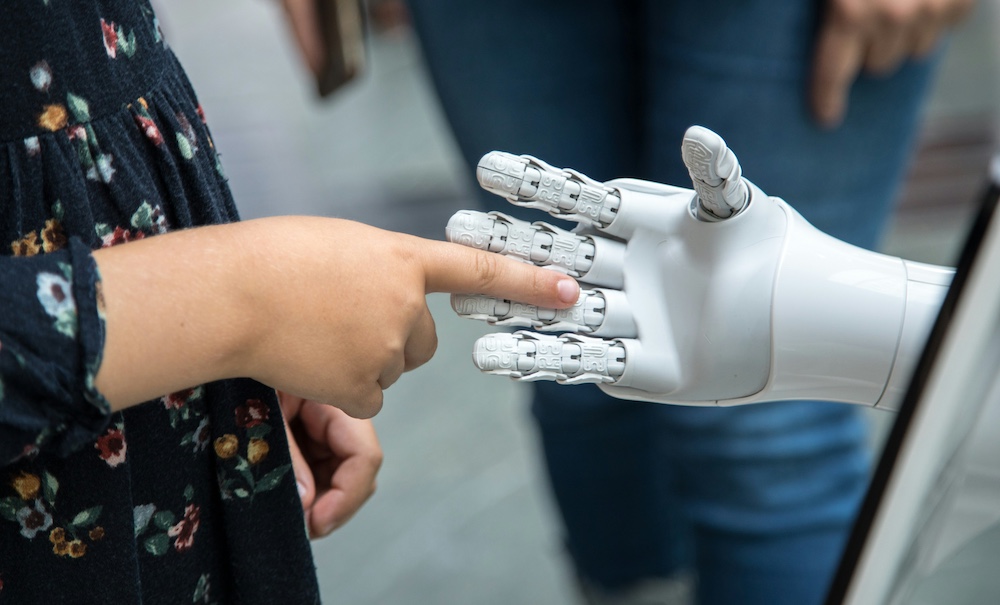
The future of meeting minutes does not need to be a competition between humans and artificial intelligence.
The strongest approach is human expertise enhanced by AI.
AI can handle repetitive and time-consuming tasks, such as transcription and preliminary organization. Human professionals can then focus on the areas that require judgment, context, neutrality, and discretion.
When technology is used responsibly, this partnership can provide the best of both worlds.
Organizations gain efficiency without sacrificing accuracy.
Minute takers gain tools that reduce administrative burden without losing professional control over the final record.
And participants receive meeting minutes that are clear, organized, accurate, and trustworthy.
AI should not replace professional judgment. It should support it.
The goal should not be to automate humans out of the process. The goal should be to use technology where it is strongest while relying on human expertise where judgment and discretion are essential.
In the end, the most effective meeting records will not come from humans or AI alone. They will come from knowing how to use both.
References
Panning, J. (2016). Do’s and Don’ts for Meeting Minutes. ASAE.
Reynolds, M. (2024). AI Minute-Taking Tensions: Navigating Risks and Best Practices. Torys LLP.
Siebesma, E. (2022). 9 Tested Tips for Effective Meeting Minutes. MeetingKing.
CSB Corporate Services. (2024, October 15). AI Minute-Taking: Convenience or Catastrophe?
Reynolds, M. (2024). AI Minute-Taking Tensions: Navigating Risks and Best Practices. Torys LLP.